Translation
I hear what people actually need — not just what they say — and translate it into a solution or the missing piece.
The shadow: I hold everyone to the standard I need myself. If it can't be explained in plain language, it isn't done.
translated · what gets built
Alexander Wybrandt. AI-augmented developer and software engineer specialised in UI/UX — with roots in frontend and graphic design. Freelancing for Danish companies, and open to the right full-time match, remote included.
01 · profile
I trained as a web integrator and graphic designer. I started in frontend — HTML and CSS, then years of WordPress builds for real clients. Today I work across the whole chain: design, code, infrastructure and operations — with AI agents as a standing part of my toolkit, not a buzzword.
My core strength was never a particular framework. It's translation: hearing what a person actually needs, and turning it into the solution — or the missing piece — that solves it. Everything else hangs on that.
And I believe one thing about the years ahead: Danish companies aren't talking loudly about AI in their products yet — but the push is coming. When it does, they'll need people who can both talk to humans and build the systems. That's the spot I'm standing on.
Strengths & shadows — This section wasn't written by me alone. It was distilled by the AI I work with every day, from 115+ real working sessions — and every strength is listed with its shadow. I approved every line, but I didn't polish them.
Hover a card — or tap it — to see the raw input it was translated from.
I hear what people actually need — not just what they say — and translate it into a solution or the missing piece.
The shadow: I hold everyone to the standard I need myself. If it can't be explained in plain language, it isn't done.
I validate designs by walking a real person's day through them.
The shadow: technically finished work isn't finished to me until it survives that walk — I've vetoed working builds late in the game.
I don't trust "done" — not even my own. Fresh eyes review anything irreversible; in one month that caught 29 real bugs before they hit production — security holes and money bugs among them.
The shadow: my gates have mostly been installed after a cost was paid, not before.
I brief with the goal and the why — not step lists. Room for judgment produces smarter work.
The shadow: the constraint only I know sometimes stays in my head. That's why everyone who works with me restates the task before they run with it.
Every working session sprouts new ideas mid-task. That's how I work — it isn't noise.
The measured shadow: half of my unwritten ideas used to die along the way. So I built a parking system: ideas only survive in writing, so now they go in writing.
Ask me a concrete product question and you'll get a fast, considered answer.
Ask me to pick a stack blind and I'll tell you honestly that's not my strength — give me one recommendation with plain-language trade-offs, and I'll decide.
How I work with AI: I write lean briefs and leave room for judgment, but nothing irreversible happens without fresh eyes on it. The agents build, research and verify; I decide what's good enough. It isn't magic — it's division of labour with checkpoints.
02 · projects
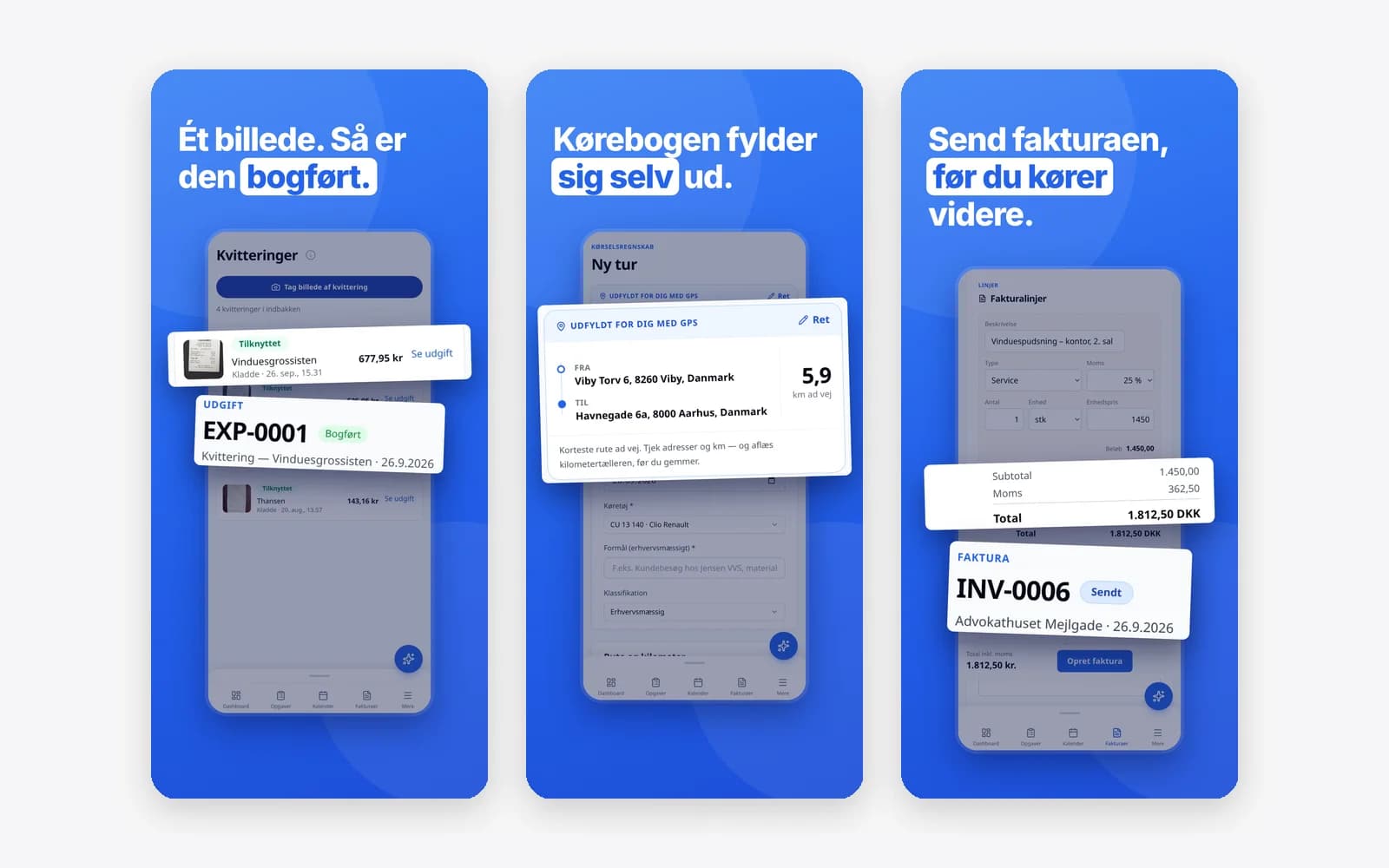
My own platform and business — built, operated and evolved by me, from frontend to server and database, and now as an app for iOS, with Android on its way. The project that's taught me most about owning the whole chain.
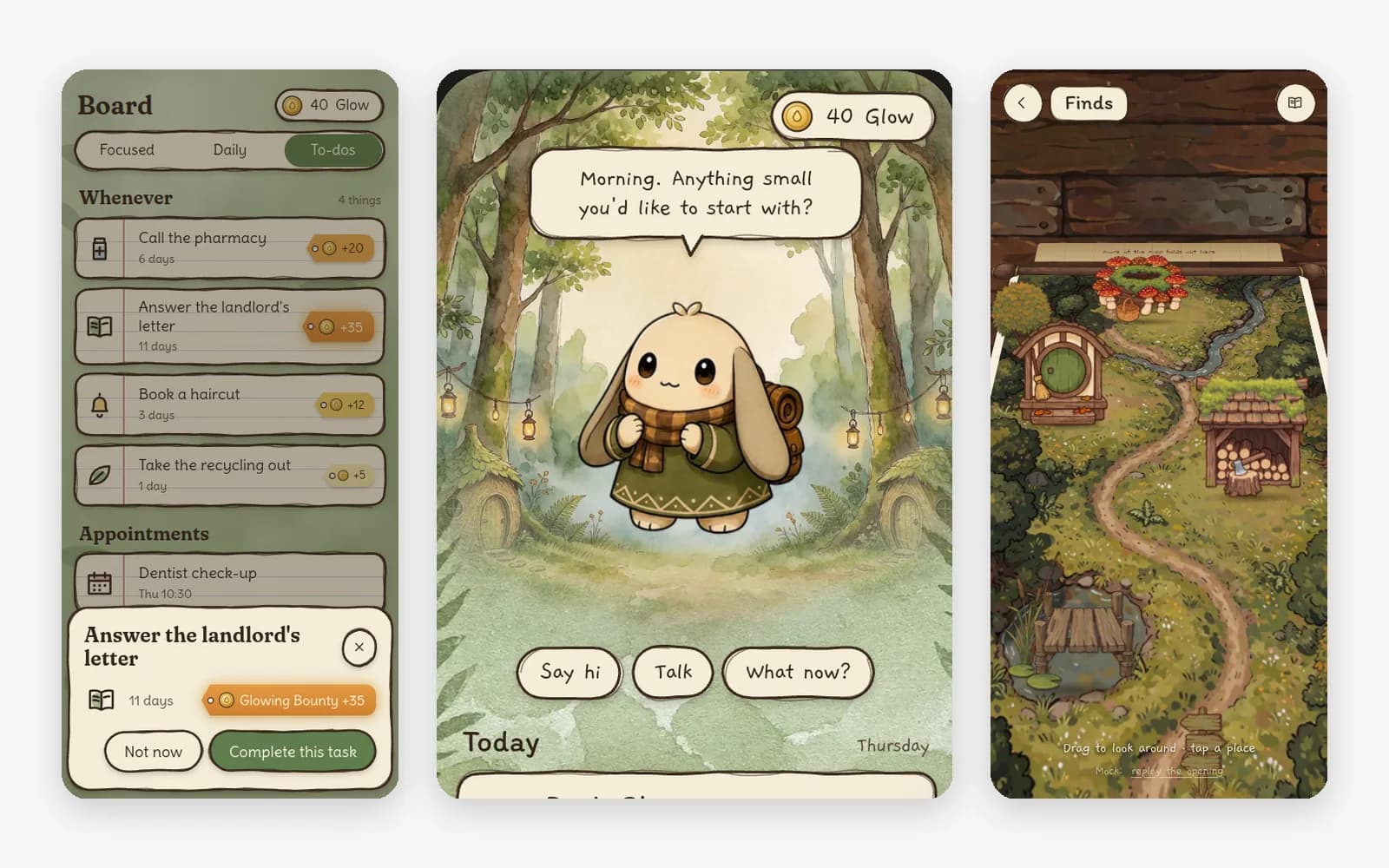
A calm task-and-reward app for ADHD, autism and PDA — no shame, no red warnings, no broken streaks. A task that got put off is worth more when it's done, not less. In development for iOS and Android.
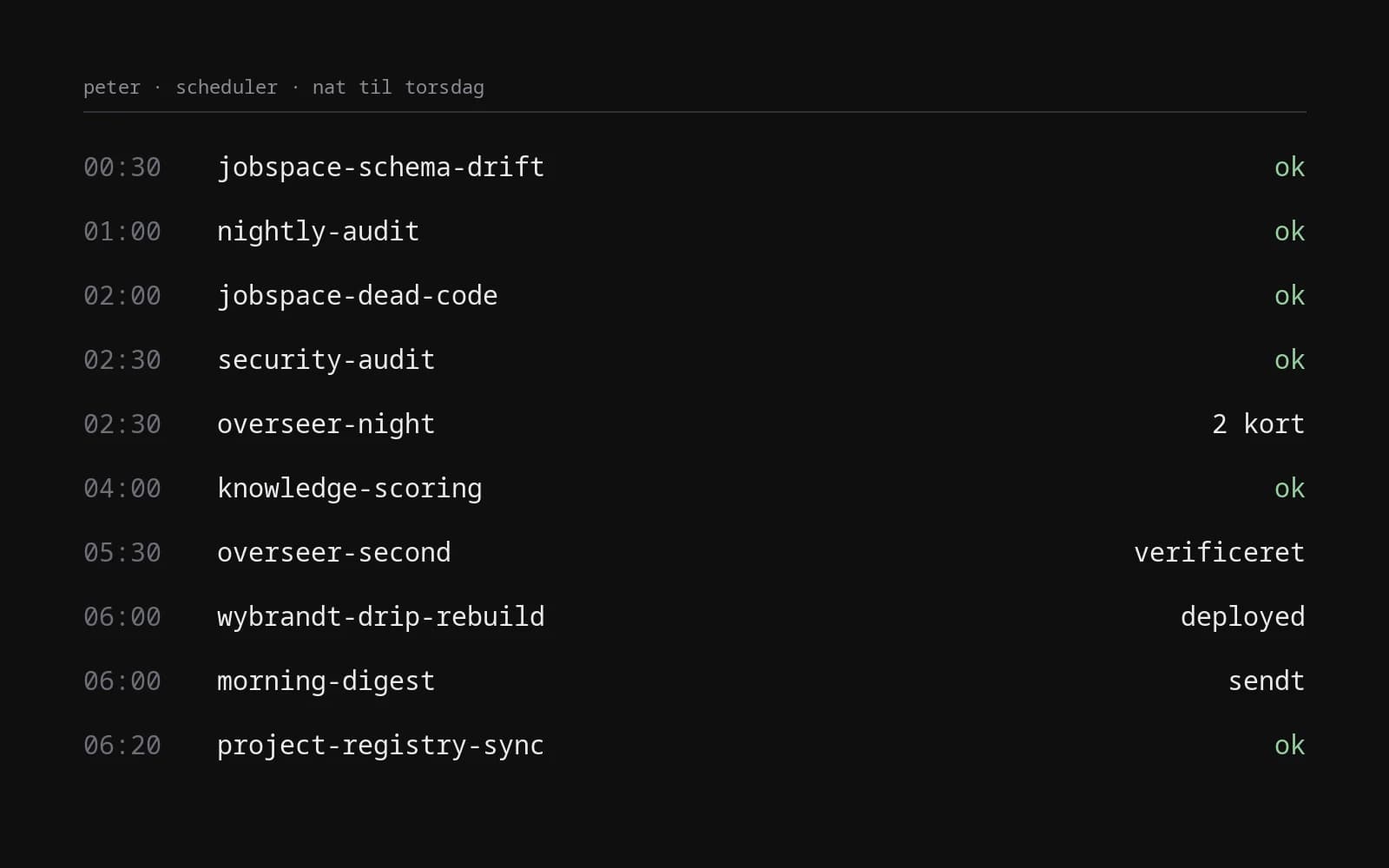
My personal AI system: a fleet of agents that research, build, monitor and report against standing checkpoints — including when I'm not at the screen. The articles on this site are produced in that system and approved by me.
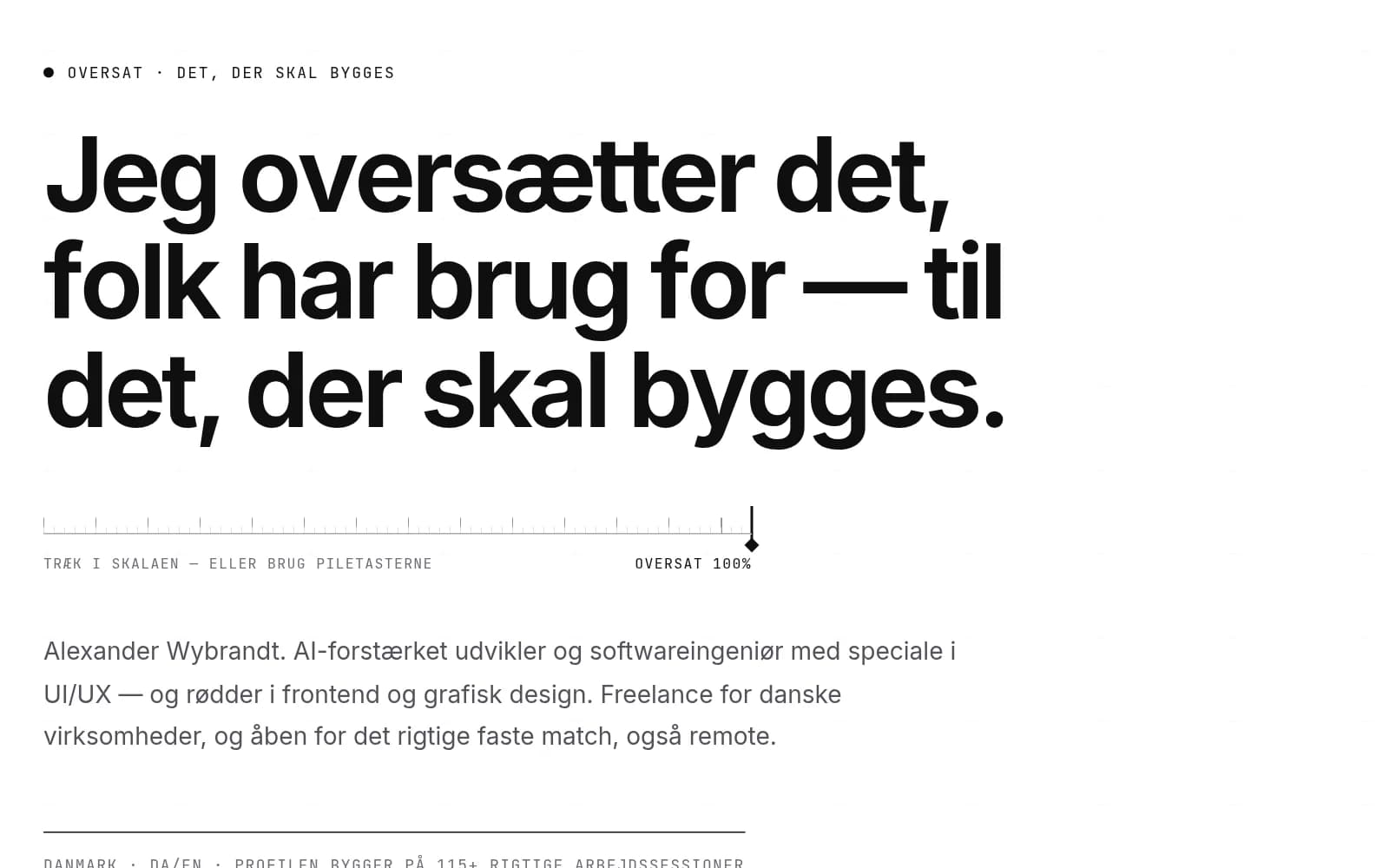
One CV, two languages, one source of truth. Migrated from managed hosting to my own server, built so content can never drift apart across languages — and designed to a written design direction, not a template.
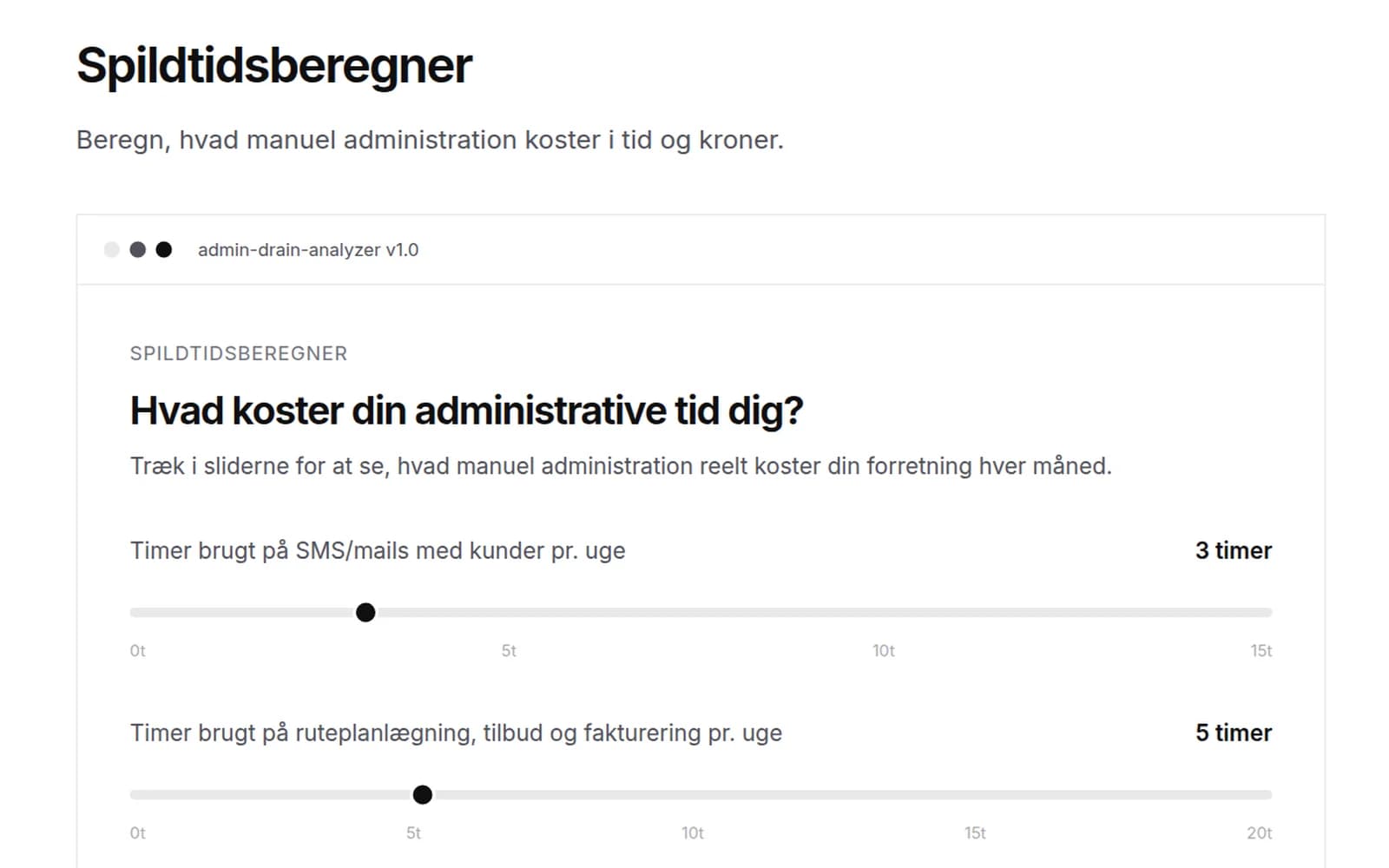
Small, freely available demos — including a calculator for what Big Tech subscriptions really cost. No email wall, no capture: try them and see how I build.
03 · contact
A short note about what you need is enough — I reply personally.